
FROM AWARENESS TO ACTION: BUILDING INCLUSIVE COMMUNITIES

Empower individuals with the knowledge and tools to address bias, foster respect, and take proactive steps toward safer, more inclusive environments.

SEE HOW YOUR INSTITUTION CAN EMPOWER STUDENTS TO BUILD INCLUSIVE ENVIRONMENTS

Take a closer look at how Bridging the Gap helps you put the right prevention in front of the right students, track progress, and create a culture of respect and belonging without adding more to your team’s workload.

USED BY HIGHER EDUCATION INSTITUTIONS NATIONWIDE TO BUILDĀ INCLUSIVE ENVIRONMENTS

BUILD A CULTURE OF RESPECT AND BELONGING

Bias and exclusion don’t just impact individuals, they affect the safety, connection, and well-being of entire institutions. Without the right awareness and tools, these challenges can persist and escalate.

Too often, institutions are left addressing the same issues without a solution that creates meaningful, lasting change.

A MEANINGFUL APPROACH TO BUILDING INCLUSIVE INSTITUTIONS

Bridging the Gap is an evidence-based course designed to help individuals understand identity, bias, and diversity, and how these factors shape relationships, behavior, and community culture.

Instead of reacting to incidents after they occur, institutions can provide a structured learning experience that helps individuals:

  • Build self-awareness and recognize personal biases
  • Understand the impact of their actions on others
  • Develop skills to foster respect, inclusion, and belonging
  • Take positive action to support safe, inclusive environments
This creates a more effective approach, one that promotes understanding, accountability, and lasting cultural change.

STRENGTHEN INCLUSIVE INSTITUTIONS WITH CONFIDENCE

Explore how Bridging the Gap equips individuals with the awareness and skills to foster respect, belonging, and safer institutions.

WHAT YOU’LL LEARN IN THIS WHITEPAPER
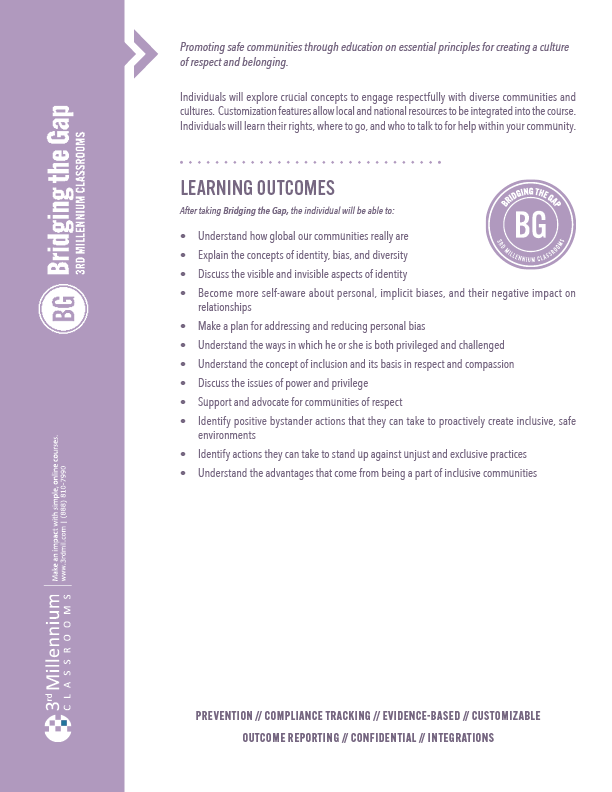
  • Explain the concepts of identity, bias, and diversity
  • Discuss the issues of power and privilege
  • Understand how global our communities really are
  • Become more self-aware about personal, implicit biases, and their negative impact on relationships