

HOW INSTITUTIONS CAN ADDRESS SUBSTANCE MISUSE & STRENGTHEN PREVENTION

With evolving substance-use trends—including fentanyl, counterfeit pills, synthetic opioids, prescription misuse, and growing mental health concerns—institutions face increasing pressure to respond effectively. This whitepaper explores what campuses need to know about today’s substance-use landscape, overdose prevention, and student wellbeing, and how Other Drugs, our evidence-based course, helps support more effective, behavior-focused prevention.

SEE HOW YOUR INSTITUTION CAN ADDRESS DRUG MISUSE

Take the course for yourself and see exactly how it helps your institution reduce substance misuse and strengthen prevention without adding more to your plate.

USED BY HIGHER EDUCATION INSTITUTIONS NATIONWIDE TO STRENGTHEN DRUG MISUSE PREVENTION

Meeting the challenge of student substance use can feel overwhelming—especially as institutions navigate rising concerns around fentanyl, counterfeit pills, synthetic opioids, overdose prevention, and student mental health with limited time and resources.

Many institutions provide education around substance use, yet students still underestimate risks and engage in unsafe behaviors, particularly involving prescription drugs, opioids, and counterfeit substances.

We’ve developed Other Drugs, an evidence-based course designed to help institutions address today’s evolving substance-use landscape through practical, behavior-focused prevention education that supports student safety, wellbeing, and informed decision-making.

SEE HOW DRUG PREVENTION DRIVES BEHAVIOR CHANGE

Start with the whitepaper to explore key learning outcomes and our evidence-based approach
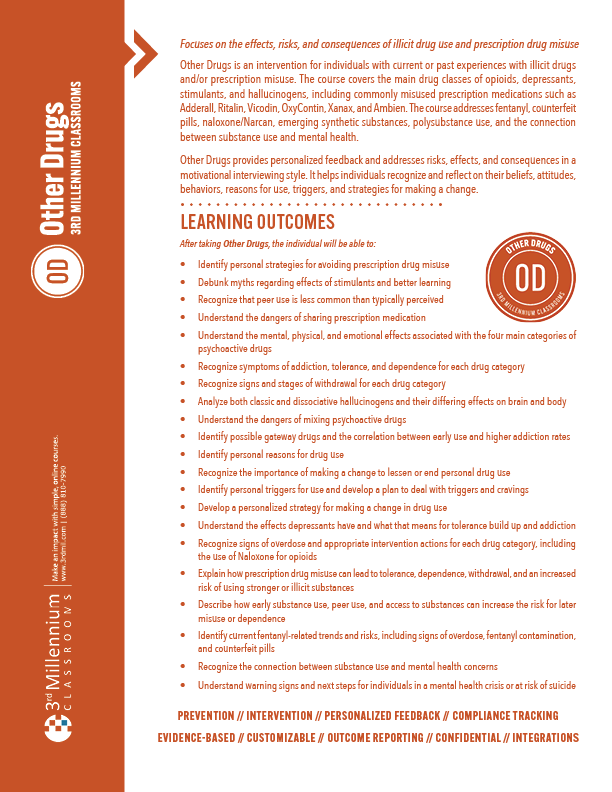
What you’ll learn from the whitepaper:

  • How students perceive and engage in prescription, illicit, and synthetic drug use
  • Why misconceptions around “safe” drugs and counterfeit pills increase risk
  • How fentanyl, synthetic opioids, and polysubstance use impact student safety
  • Why overdose-prevention education and awareness around naloxone and fentanyl test strips matter
  • How substance use and mental health challenges often overlap
  • Why behavior-focused prevention is critical for effective student education
  • How to align prevention strategies with your campus environment and student needs