
Take the course for yourself and see exactly how it helps your institution recognize warning signs, respond effectively, and support prevention without adding more to your plate.
Red Flags not only equips faculty and staff to recognize and respond to human trafficking—it also supports ongoing professional development.
Participants can earn continuing education credits while completing the course, making it easy for your institution to align training with certification and licensing requirements.
Meeting training and prevention expectations around human trafficking can feel overwhelming—especially with limited time, resources, and visibility into student experiences.
Many institutions provide general awareness, but faculty and staff still struggle to recognize the warning signs or know how to respond.
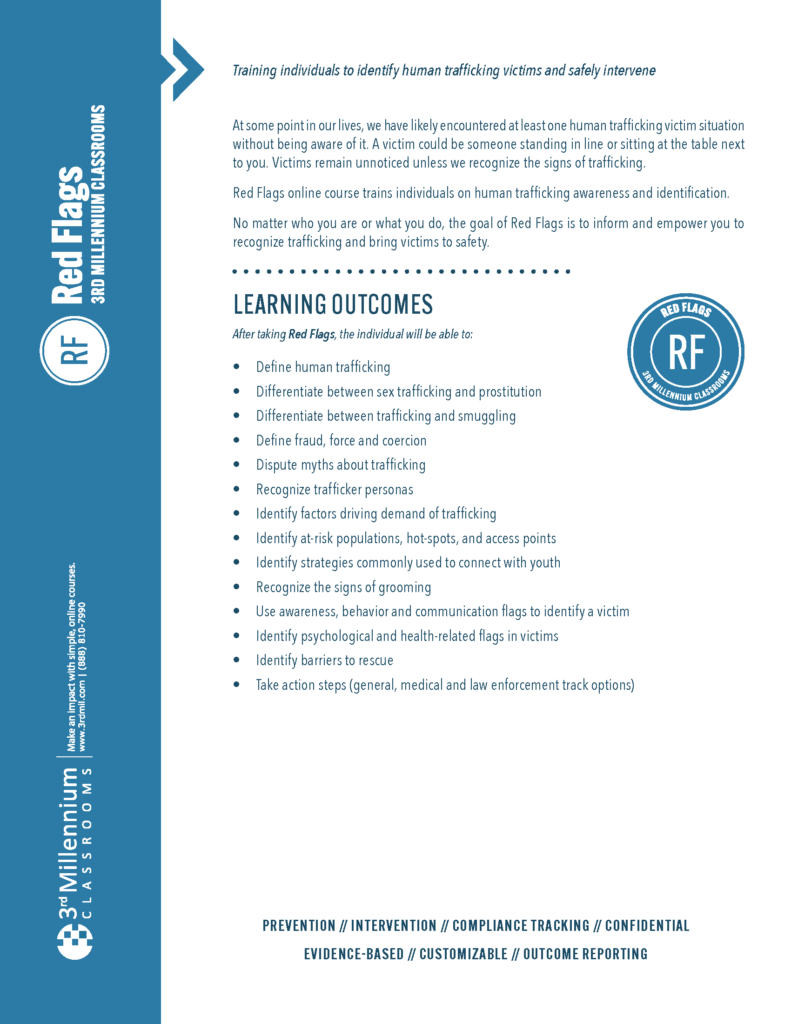
3rd Millennium Classrooms developed Red Flags, an evidence-based course designed to help institutions build awareness, strengthen response, and drive meaningful prevention.
Start with the whitepaper to explore key learning outcomes and our evidence-based approach
What you’ll learn from the whitepaper: