

SUPPORT COURTS & AGENCIES IN RECOGNIZE AND RESPOND TO HUMAN TRAFFICKING

A practical, evidence-based training designed for court and agency professionals to improve identification, response, and outcomes in human trafficking cases.

EQUIP YOUR COURT OR AGENCY TO RECOGNIZE HUMAN TRAFFICKING

Take the course and see how it helps your court or agency identify warning signs, respond effectively, and support prevention without adding more to your plate.

TRUSTED BY COURTS AND AGENCIES NATIONWIDE TO STRENGTHEN AWARENESS, IDENTIFICATION, AND RESPONSE TO HUMAN TRAFFICKING

MEET PROFESSIONAL REQUIREMENTS FOR COURTS & AGENCIES WITH CEUs

Red Flags not only equips faculty and staff to recognize and respond to human trafficking—it also supports ongoing professional development.

Participants can earn continuing education credits while completing the course, making it easy for your institution to align training with certification and licensing requirements.

  • Supports continuing education requirements for faculty and staff
  • Aligns with professional development goals
  • Easy to assign and track completion

Meeting training and compliance expectations around human trafficking can feel overwhelming—especially with limited time, resources, and visibility into individuals’ circumstances.

Many courts and agencies provide general awareness, but professionals still face challenges recognizing warning signs or knowing how to respond appropriately.

3rd Millennium Classrooms developed Red Flags, an evidence-based course designed to help courts and agencies strengthen identification, improve response, and support meaningful prevention.

Start with the whitepaper to explore key learning outcomes and our evidence-based approach for courts and agencies:

What you’ll learn from the whitepaper:
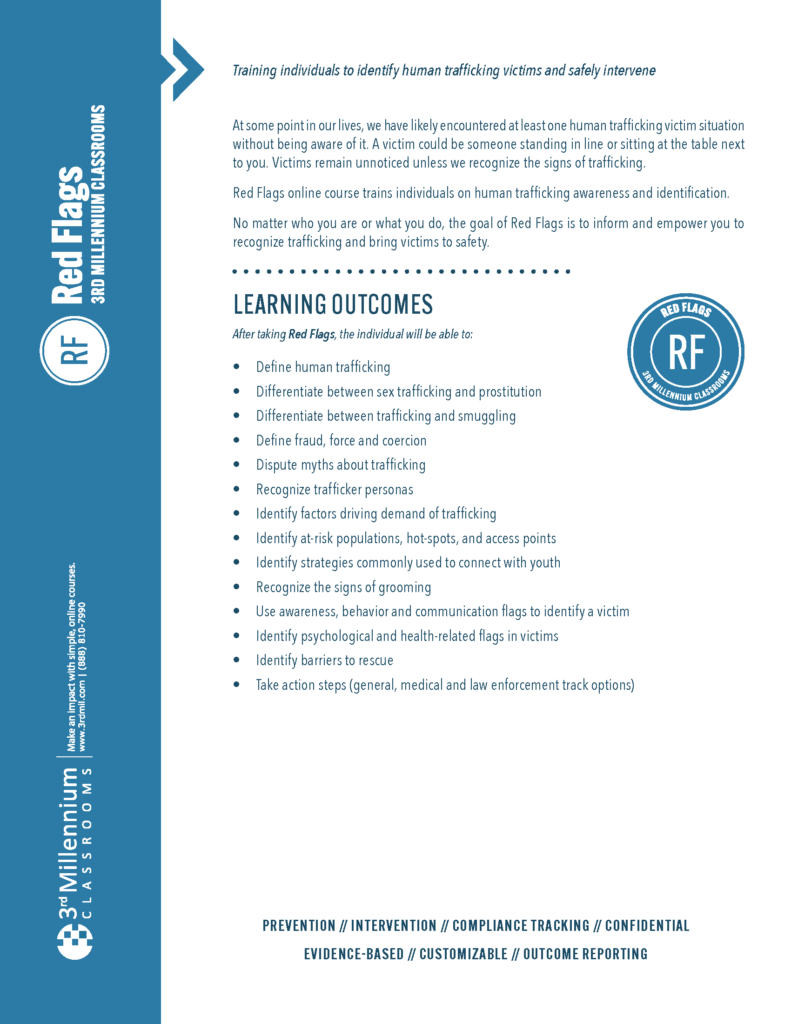
  • How human trafficking operates and why it often goes unrecognized within court and agency systems
  • Common myths and misconceptions that can interfere with accurate identification and case handling
  • How traffickers recruit, groom, and control victims
  • Key risk factors and populations most vulnerable to exploitation
  • Warning signs and behavioral indicators professionals should be equipped to identify
  • Why victims may be hesitant to seek help or disengage from exploitative situations
  • How to recognize and respond appropriately to potential trafficking cases within courts and agencies