
Introduction
Universities across the United States face a growing challenge that extends far beyond student safety: the multi-million dollar cost of hazing.
When hazing incidents occur in fraternities, athletic teams, or student organizations, the consequences often include lawsuits, legal settlements, investigations, and long-term reputational damage. For many institutions, a single hazing case can cost millions of dollars and impact the campus for years.
Hazing is not just a conduct issue. It is a financial, legal, and reputational risk that universities cannot afford to ignore.
The Real Financial Cost of Hazing for Universities
The cost of hazing incidents goes far beyond immediate response efforts. Universities often face a range of direct financial consequences that can quickly escalate.
These include:
- Legal settlements related to injuries or deaths
- Lawsuits filed by families of victims
- Costs associated with internal and external investigations
- Compliance penalties tied to policy failures
- Increased insurance premiums following incidents
Hazing is also more common and costly than many institutions realize. Each year, there are approximately 300 lawsuits related to hazing, with the average settlement reaching around 1.2 million dollars (Bauer, 2026). In severe cases involving serious injury or death, settlements can be significantly higher and have higher consequences.
These numbers make it clear that hazing is not only a safety issue but also a major financial liability for colleges and universities.
Major Hazing Lawsuits That Cost Universities Millions
High-profile hazing cases have repeatedly drawn national attention and resulted in significant financial and legal consequences for colleges and universities. These incidents demonstrate how quickly hazing can escalate into a crisis that impacts not only students but entire institutions.
One of the most widely known examples is the Penn State fraternity hazing death. The incident led to millions of dollars in settlement costs, criminal charges against multiple students, and the permanent closure of the fraternity involved. The case also generated intense national media coverage, placing the university under prolonged public scrutiny.
Other notable cases further highlight the risks. At LSU, a fraternity hazing death resulted in legal action, policy changes, and increased oversight of student organizations. Similarly, a hazing incident at Florida State led to a student’s death, lawsuits, and widespread institutional scrutiny.
These cases underscore a critical reality. Hazing incidents can quickly become high-profile legal and reputational crises, reinforcing the need for proactive prevention strategies.
The Hidden Costs of Hazing Beyond Lawsuits
The financial impact of hazing is only part of the story. The hidden costs can be just as damaging and often last much longer.
When hazing incidents occur, universities may experience lasting reputational damage that affects how prospective students, families, and employers perceive the institution. Negative media attention can contribute to enrollment declines, while alumni and donors may distance themselves from the university.
Institutions may also face increased compliance requirements, heightened oversight, and additional administrative burden as they work to address systemic issues. In many cases, universities spend years rebuilding trust and repairing their brand.
When hazing scandals make national headlines, the effects extend far beyond the initial incident. The long-term impact can shape an institution’s reputation forever.
Why Hazing Prevention Is a Financial Investment
Investing in hazing prevention is one of the most effective ways for universities to reduce risk and protect both students and the institution.
Proactive hazing prevention is effective for both students and staff, emphasizing education on risks and consequences, equipping leaders across student organizations, athletics, and campus departments to set the right tone, and providing anonymous reporting options that encourage early action. Strong, comprehensive programs also establish clear expectations and foster a culture where accountability is the norm.
The 3rd Millennium Hazing & Hosting Course provides a scalable solution that empowers institutions to deliver consistent, high-quality hazing prevention training to all students and staff. Through engaging, research-based content, the course helps students understand what hazing is, why hazing is harmful, and how to prevent hazing by making safer, more ethical decisions. By promoting positive hosting practices alongside hazing prevention strategies, the course fosters safer, more inclusive campus communities.
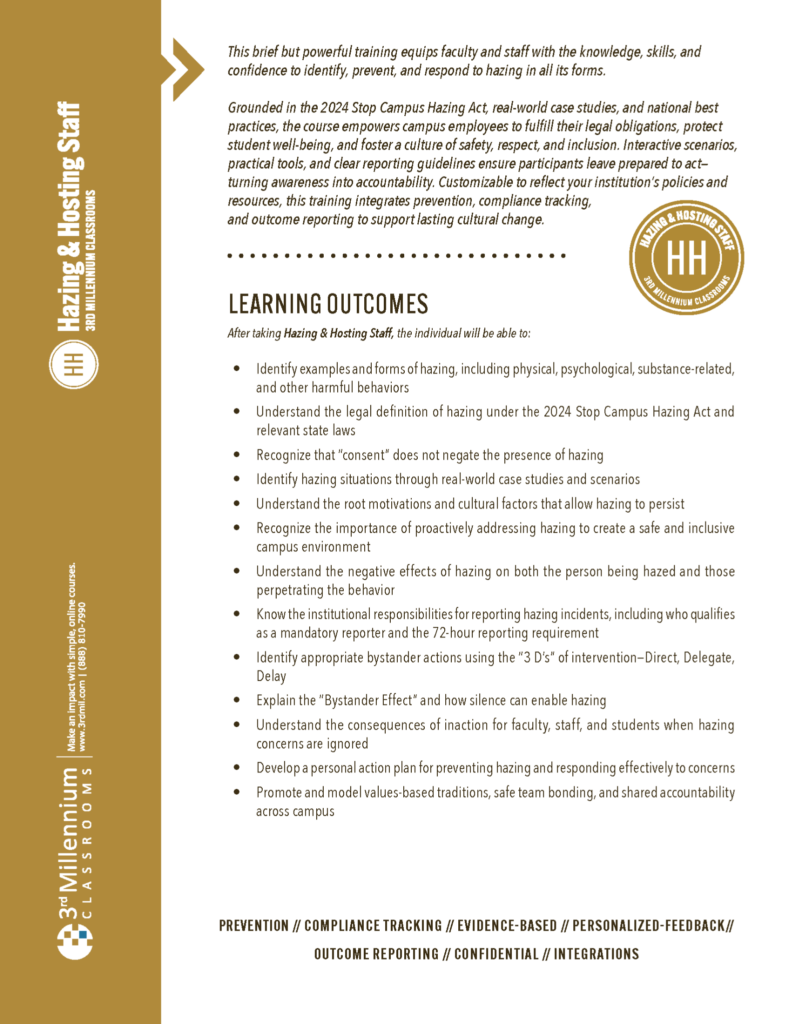
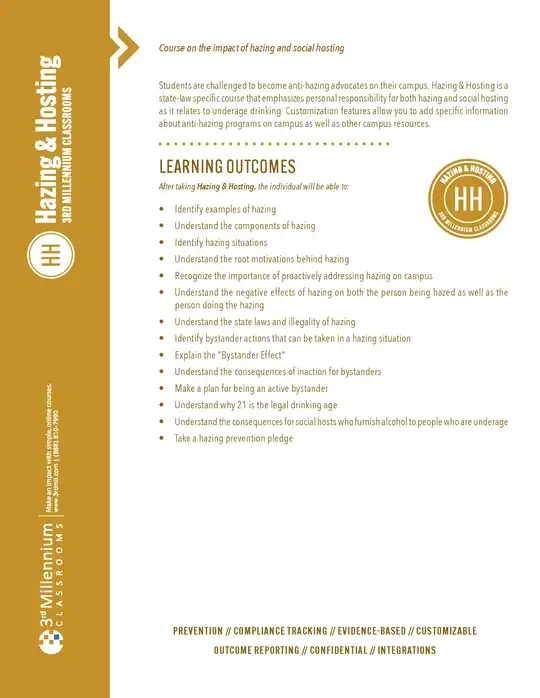
Rather than reacting to incidents after they occur, universities can use prevention programs to reduce violations before they happen. The cost of prevention is significantly lower than the financial and reputational consequences of a hazing tragedy.
The Growing Legal Pressure on Universities
Universities are facing increasing legal and regulatory pressure to address hazing and demonstrate accountability.
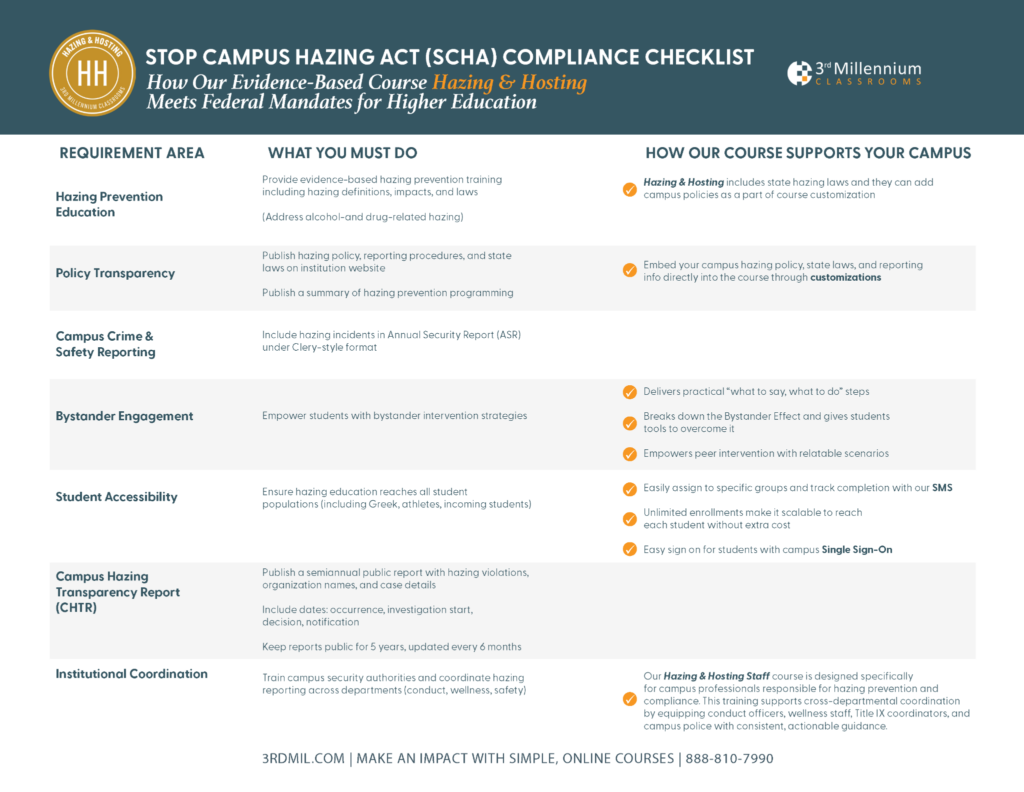
Recent developments, including the Stop Campus Hazing Act, have introduced new requirements around reporting, transparency, and institutional responsibility. In addition, many states have strengthened hazing laws, increasing expectations for prevention, documentation, and enforcement.
Institutions are no longer evaluated solely on how they respond to incidents. They are also expected to show that they are actively working to prevent hazing through education, policy, and oversight.
The 3rd Millennium Hazing & Hosting Course supports these efforts by helping institutions meet federal mandates, including compliance with the Stop Campus Hazing Act. With consistent, trackable training, universities can demonstrate a proactive approach to hazing prevention while reducing institutional risk.
Strategies to Prevent Hazing on College Campuses
Preventing hazing requires a comprehensive, campus-wide approach that prioritizes education, accountability, and culture change.
Effective strategies include implementing mandatory hazing prevention training for students, staff, and organizations, establishing clear and accessible anti-hazing policies, and providing anonymous reporting channels that allow students to safely report concerns. Strong accountability systems ensure that violations are addressed consistently, while leadership education helps student leaders set the tone within their organizations.
Additional strategies, such as bystander intervention training, leadership accountability, and promoting positive team-building alternatives, help reinforce a safer campus culture. Oversight of student organizations and ongoing awareness campaigns further support prevention efforts.
Building a campus culture that promotes respect, inclusion, and positive team building is equally important.
Scalable education plays a central role in these efforts. The 3rd Millennium Hazing & Hosting Course helps institutions implement best practices by delivering engaging, consistent training that reinforces expectations and empowers students and staff to make informed decisions.
How Institutions Can Address Hazing
Hazing prevention requires a coordinated approach within your department, focused on education, accountability, and culture change.
Departments can strengthen prevention efforts by aligning their policies with hazing laws, implementing consistent training for students and leaders, and creating clear systems for reporting and enforcement. Setting expectations early and reinforcing them regularly is key to reducing risk.
The 3rd Millennium Hazing & Hosting Course provides a turnkey solution that helps departments deliver consistent, engaging training that reinforces policies and supports compliance with federal legislation such as the Stop Campus Hazing Act.
By promoting respectful team building, leadership accountability, and ongoing education, departments can play a critical role in preventing hazing and creating a safer, more positive student experience.
Frequently Asked Questions About Hazing
What is Hazing?
Hazing refers to activities required for joining or maintaining membership in a group that humiliate, degrade, abuse, or endanger participants.
How Much Do Hazing Lawsuits Cost Universities?
Hazing lawsuits can be extremely costly, with some settlements exceeding several million dollars, particularly in cases involving serious injury or death. Beyond the financial impact, these cases often result in significant reputational damage, negative media attention, and long-term consequences for enrollment, alumni support, and institutional trust.
Why Is Hazing Prevention Important for Colleges?
Hazing prevention protects student safety, reduces legal and financial risk, and helps universities avoid reputational damage that can impact enrollment and long-term success.
The 3rd Millennium Hazing & Hosting Course supports these efforts by providing scalable training that educates students, reinforces policies, and helps prevent incidents before they occur.
Conclusion
Hazing is a multi-million dollar problem for universities, but it is also preventable.
By investing in education, strengthening policies, and building a culture of accountability, institutions can protect their students and staff while reducing financial and reputational risk.
The most effective approach starts with proactive prevention.
Take the next step by implementing the 3rd Millennium Hazing Prevention Course to equip your students with the knowledge and skills to prevent hazing and create a safer campus environment.
References:
Bauer, F. (2026, February 12). College hazing statistics: 2026 verified research data. ZipDo. https://zipdo.co/college-hazing-statistics/?utm_source=chatgpt.com