According to the National Center for Education Statistics, 13% of the 8th graders, 14% of the 10th graders, and 15% of the 12th graders were absent at least three days a month. Routine unexcused absences can be signs of problems at home and/or school. Preventing truancy can help prevent other behaviors like dropping out of school, substance use, or other offenses.
Causes of Truancy
There are many factors that contribute to the risk for both school absenteeism and school dropout. Risk factors for absenteeism can be broken into seven main themes:
- Physical and mental problems of the child
- Substance abuse
- Behavior issues and referrals
- Problems at or with school
- Atmosphere of the school
- Parenting problems or difficulties
- Family structure problems
Risk Factors for School Absenteeism
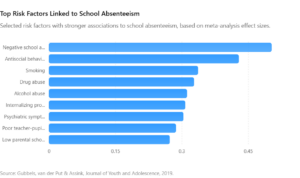
Source: Gubbels, van der Put & Assink’s 2019 meta-analysis found 28 significant risk domains for school absenteeism and identified large effects for factors including negative school attitude, substance abuse, internalizing/externalizing problems, and low parent-school involvement.
Addressing truancy requires more than monitoring attendance; it requires understanding why students are absent in the first place. By identifying risk factors early and implementing targeted interventions, schools, juvenile justice agencies, and community partners can work together to improve attendance, strengthen student connections, and create pathways for long-term success.
Prevention of Truancy
Many of these issues can be proactively addressed by teachers, administrators, parents, and other adults in a child’s life.
- Substance Abuse: Underage drinking, vaping, marijuana use, and prescription drug abuse negatively affect academic achievement and are significant risk factors for absenteeism and dropout.
- Behavior Issues: Students with behavior problems are often pulled out of class for detention or suspension, compounding their truancy issues.
- School Climate: Negative school or class climate, feelings of unsafety, lack of organization, and harassment are also risk factors. These can be addressed through education about cyberbullying, harassment, and fostering healthy self-esteem and relationships.
Addressing truancy requires a multifaceted approach involving educators, administrators, and parents. With the right tools and resources, schools can create a supportive environment that fosters student attendance and success.
For over 25 years, 3rd Millennium Classrooms has been equipping high schools with tools to help students change their behavior. We address underage drinking, drug use, vaping, and other risky behaviors through our evidence-based online courses. Learn more about how you can bring our proven programs to your campus to make a positive difference in your students’ lives at 3rdmil.com.
Looking for an evidence-based intervention for students struggling with attendance? Learn more about Truancy 101 and how it can support positive change.